




Free Plan: Enjoy 7 days of premium support for one requested club.
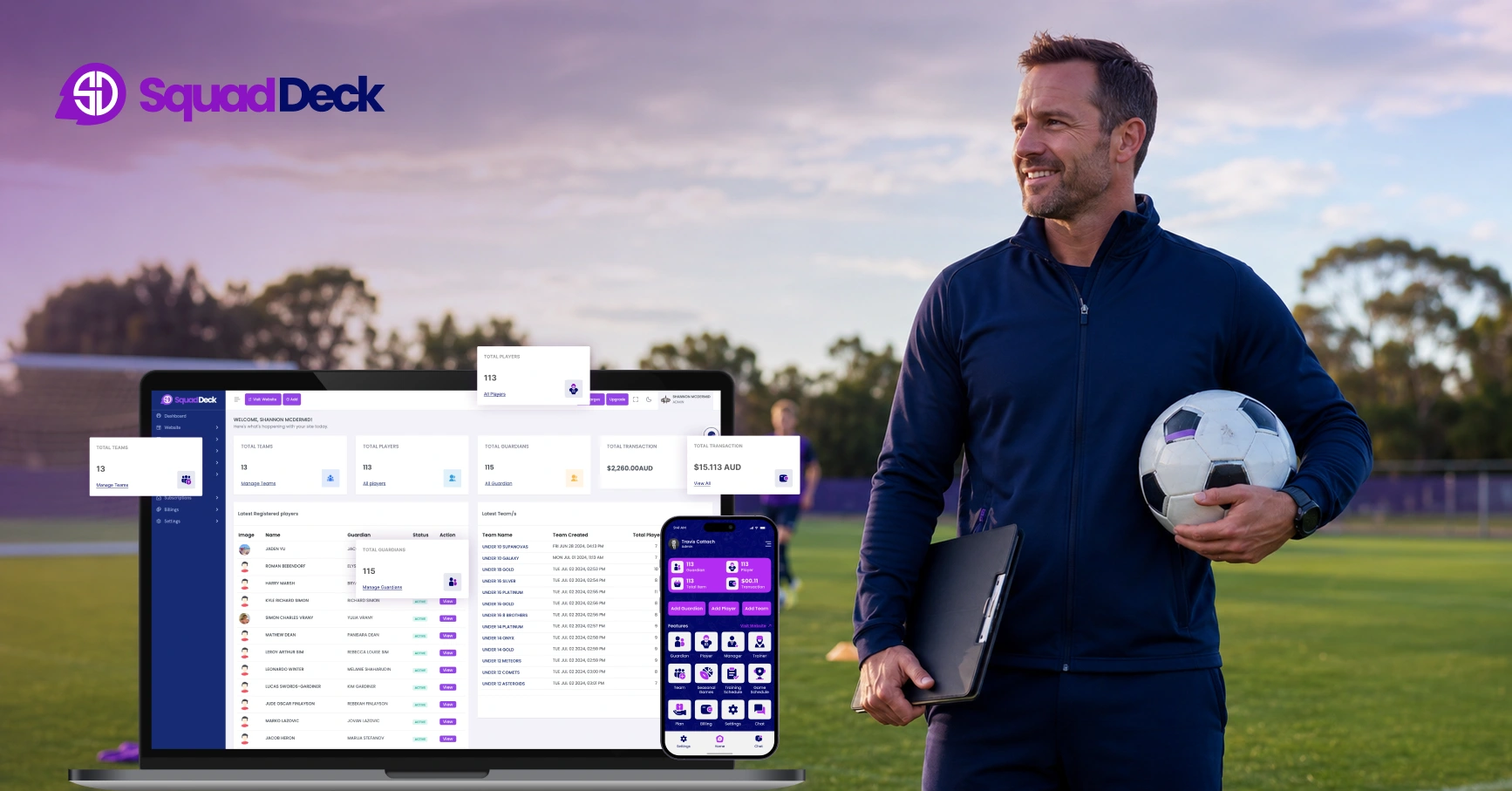
Changing Club Management Systems in 2026: What Every Sports Club Admin Must Consider
Is Your Club Management Software Holding You Back?
If you’re still juggling spreadsheets, chasing membership payments on WhatsApp, and manually scheduling fixtures every weekend — you’re not alone. Thousands of sports club administrators around the world are stuck in the same exhausting cycle.
The good news? Switching to a modern club management system in 2026 is far easier, faster, and more affordable than most club managers expect. The challenge is knowing what to look for before you make the move.
This guide walks you through everything you need to consider when changing club management systems — from timing and stakeholder buy-in to features, pricing, and finding the right fit for your club.
1. Why 2026 Is the Right Year to Switch
Sports clubs that made the shift to digital management platforms in the last two years report saving an average of 10+ hours per week on administrative tasks alone. In 2026, expectations have shifted dramatically:
-
 Members expect online registration and digital payment options
 - Parents want real-time communication from coaches and administrators
- Club directors need data, not guesswork, when making decisions
- Regulatory and financial reporting requirements are getting stricter
 Members expect online registration and digital payment options
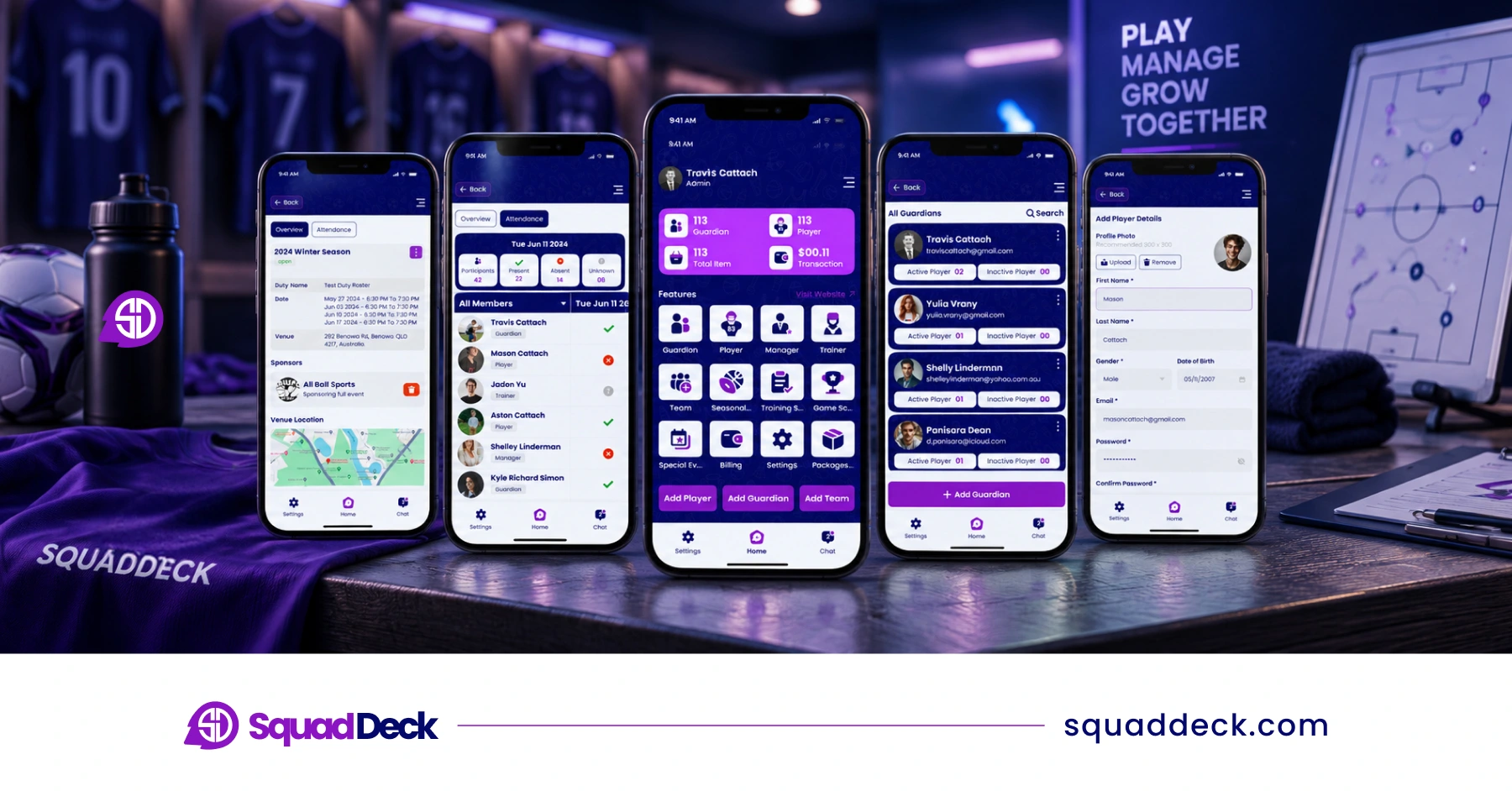
The sports management software market has matured significantly. Platforms today offer mobile apps, automated payment collection, built-in website builders, and real-time chat — features that were enterprise-only just five years ago.
“We were spending more time on admin than on coaching. Switching platforms gave us our weekends back. The onboarding was done in two sessions over two weeks — far less disruptive than we expected.” — Academy Director, Youth Football Club (UK)
2. Timing Your Switch: When Should You Move?
One of the most common mistakes clubs make is switching systems mid-season. The right timing reduces friction for staff, members, and parents alike.
Best times to switch:
- End of season / off-season — gives your team breathing room to learn the new system
- Before annual membership renewal — migrate data once, then let the system handle renewals automatically
- Before your AGM — align key stakeholders and get a formal go-ahead
- After a painful admin peak (like a registration drive gone wrong) — motivation is highest
Most modern platforms, including SquadDeck, offer structured onboarding and data migration support. Your historical member records, payment data, and schedules can typically be imported in under a week.
3. Getting Stakeholder Buy-In
Switching platforms isn’t just a technical decision — it’s an organisational one. Whether you’re running a grassroots football club or a multi-sport academy, you’ll need the support of coaches, committee members, parents, and players.
How to build internal consensus:
- Share a short demo video or live walkthrough with key decision-makers
- Highlight time savings specific to each stakeholder group (coaches, treasurers, coordinators)
- Reference case studies from similar clubs
- Address the #1 fear upfront: ‘What happens to our existing data?’
- Appoint a ‘Club Champion’ — one person who owns the transition and becomes the internal expert
Pro tip: The Club Champion doesn’t need to be tech-savvy. They need to be organised, trusted by the team, and willing to attend two or three onboarding sessions with your software provider.
4. Key Features to Look For in 2026
Not all club management software is built the same. Here’s what genuinely matters for a sports club in 2026 — beyond the marketing claims:
Non-negotiables:
- Mobile app (iOS & Android) — your coaches and parents live on their phones
- Automated payment collection — recurring memberships, session fees, tournament entry
- Multi-team and sport support — especially if you run more than one squad
- Attendance and progress tracking — essential for academies and performance clubs
- Parent and guardian portal — transparency builds trust and reduces admin messages
Strong differentiators (look for these):
- Built-in website builder with custom domain — eliminates the need for a separate site
- E-commerce functionality — sell kits, merchandise, and training gear directly
- Real-time chat and notifications — replaces scattered WhatsApp groups
- Local payment gateway support — critical for clubs outside the US/UK (bKash, Nagad, SSL)
- Sponsor management — often overlooked but a real revenue opportunity
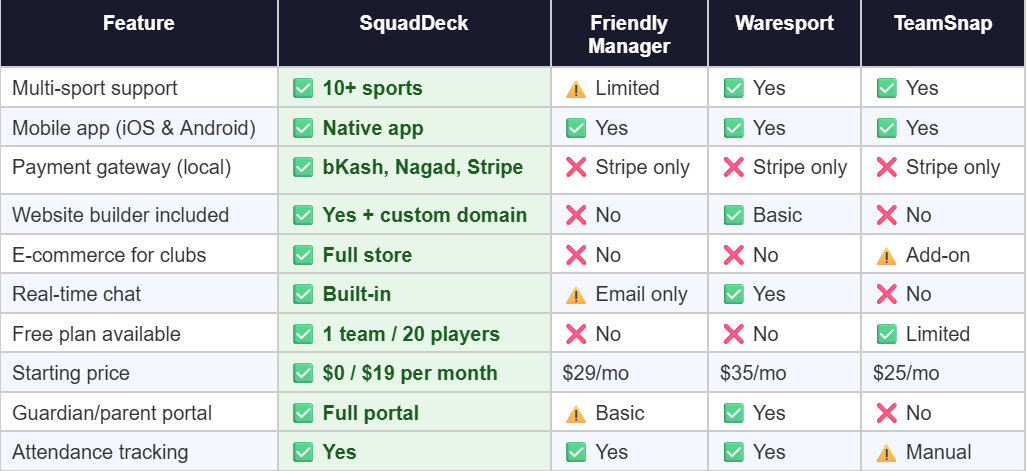
SquadDeck is the only platform in this comparison that offers local payment gateway support (bKash, Nagad, DBBL, SSL Commerz) alongside international options like Stripe — making it the strongest choice for clubs in South Asia, Southeast Asia, and emerging markets.
6. Understanding the Real Cost of ‘Free’ Software
Many clubs start with free tools — spreadsheets, Facebook groups, free registration platforms. The administrative burden of these tools is often invisible until it becomes unbearable.
Here’s what ‘free’ actually costs your club:
- Manual payment chasing: 3–5 hours per week for a treasurer
- No automated reminders: higher dropout rates, lower renewal rates
- Data scattered across emails, sheets, and apps: compliance and reporting nightmares
- No mobile app: disengaged parents and coaches
- Transaction fees on ‘freemium’ tools: often 3–5% per transaction
A club processing $2,000/month in membership fees on a 4% freemium platform pays $80/month in hidden fees — more than SquadDeck’s Starter plan at $19/month, with a fraction of the features.
7. Data Migration: What Actually Happens to Your Records?
This is the question that stops most clubs from switching. The fear of losing years of member data, payment history, and event records is legitimate — but largely unfounded with modern platforms.
What good onboarding looks like:
- A dedicated onboarding session (not just a PDF guide)
- Import tools for CSV/Excel member lists
- Clear timeline: most clubs complete migration in 5–10 business days
- A named support contact during the transition period
- Training sessions for admin staff and coaches
SquadDeck provides guided onboarding alongside your team — not a self-serve setup process. Every new club gets structured support sessions to ensure your data is transferred accurately and your team is confident before going live.

8. What to Avoid When Switching Systems
Even with the right platform, transitions can go wrong. Here are the most common mistakes club admins make during a switch:
- Switching during peak season — wait for the off-season if at all possible
- Not communicating with members early — send at least two emails before the switchover date
- Skipping the data audit — clean your member list before importing (remove duplicates, update emails)
- Assigning no internal owner — if everyone is responsible, no one is
- Choosing based on price alone — the cheapest plan with the wrong features costs more in the long run
“The biggest mistake I see clubs make is rushing the rollout. Give your team four to six weeks for a comfortable transition. The clubs that invest a few hours upfront save dozens of hours within the first month.”
— Sports Operations Consultant, Global Sports Management Forum
Frequently Asked Questions
How long does it take to switch club management systems?
For most clubs, a full transition takes between 1 and 4 weeks depending on the size of your member database and the complexity of your existing setup. With structured onboarding support, the core setup — members, payments, and schedules — can be live within 5–7 business days.
Will we lose our existing member data when switching?
No. Most modern platforms including SquadDeck support CSV and Excel imports for member data. Your payment history and records from your old system can be archived or imported depending on the export options your current provider offers.
Is club management software worth it for small clubs?
Yes — especially for small clubs. Small club treasurers and coordinators are often volunteers wearing many hats. Automating even 3–4 hours of admin per week creates significant value. SquadDeck’s Free plan supports 1 team and 20 players at no cost, making it risk-free to try.
What is the best club management software for multi-sport clubs?
For clubs running multiple sports or disciplines, you need a platform that supports multiple teams, coaches, and event types under one account. SquadDeck’s Pro plan supports up to 25 teams and 500 players across 10+ sports including football, cricket, basketball, rugby, and more.
How do I choose between club management platforms?
Start with your three biggest admin pain points. Then evaluate platforms based on: (1) whether they solve those specific problems, (2) total cost including transaction fees, (3) quality of onboarding support, and (4) mobile app availability. Request a demo from your shortlist and involve your most admin-heavy team member in the decision.
Final Thoughts: Make the Switch Before the Season Starts
Changing your club management system doesn’t have to be a stressful, high-risk project. With the right timing, stakeholder alignment, and a platform that genuinely supports your transition, most clubs are fully operational within two weeks — and wondering why they waited so long.
In 2026, there is no competitive advantage in running your club manually. The administrative tax of spreadsheets, WhatsApp groups, and chased invoices is real, and it comes directly out of the time you could be spending on sport, community, and growth.
SquadDeck was built specifically to remove that administrative burden — with a mobile app, multi-sport support, built-in payment processing, real-time communication, and a free plan to get started with zero risk.
Latest Sports