




Free Plan: Enjoy 7 days of premium support for one requested club.

How AI is Transforming Youth Sports Management
Running a youth sports club used to mean stacks of paper rosters, endless parent phone calls, and a coach trying to remember which player just came back from a sprained ankle. Today, artificial intelligence is quietly rewriting that reality. From predicting injury risk to automating parent communication, AI is transforming youth sports management into a faster, safer, and more personalized experience for players, coaches, and administrators alike.
For club directors, academy owners, and league organizers, understanding how AI is transforming youth sports management isn’t just a technology trend to watch — it’s quickly becoming the difference between clubs that scale smoothly and clubs that stay buried in spreadsheets.
The Growing Role of AI in Youth Sports Management
A decade ago, AI in sports belonged almost exclusively to professional teams with dedicated analytics departments. That’s no longer true. Cloud-based platforms have brought the same predictive power to community clubs, school leagues, and academies working with a fraction of the budget.
Wearable sensors, mobile apps, and cloud dashboards now collect data automatically in the background of everyday training — no analytics degree required. For organizations managing hundreds of players across multiple teams and age groups, this shift means administrative hours once spent on manual tracking can instead go toward what actually matters: developing athletes and building community.
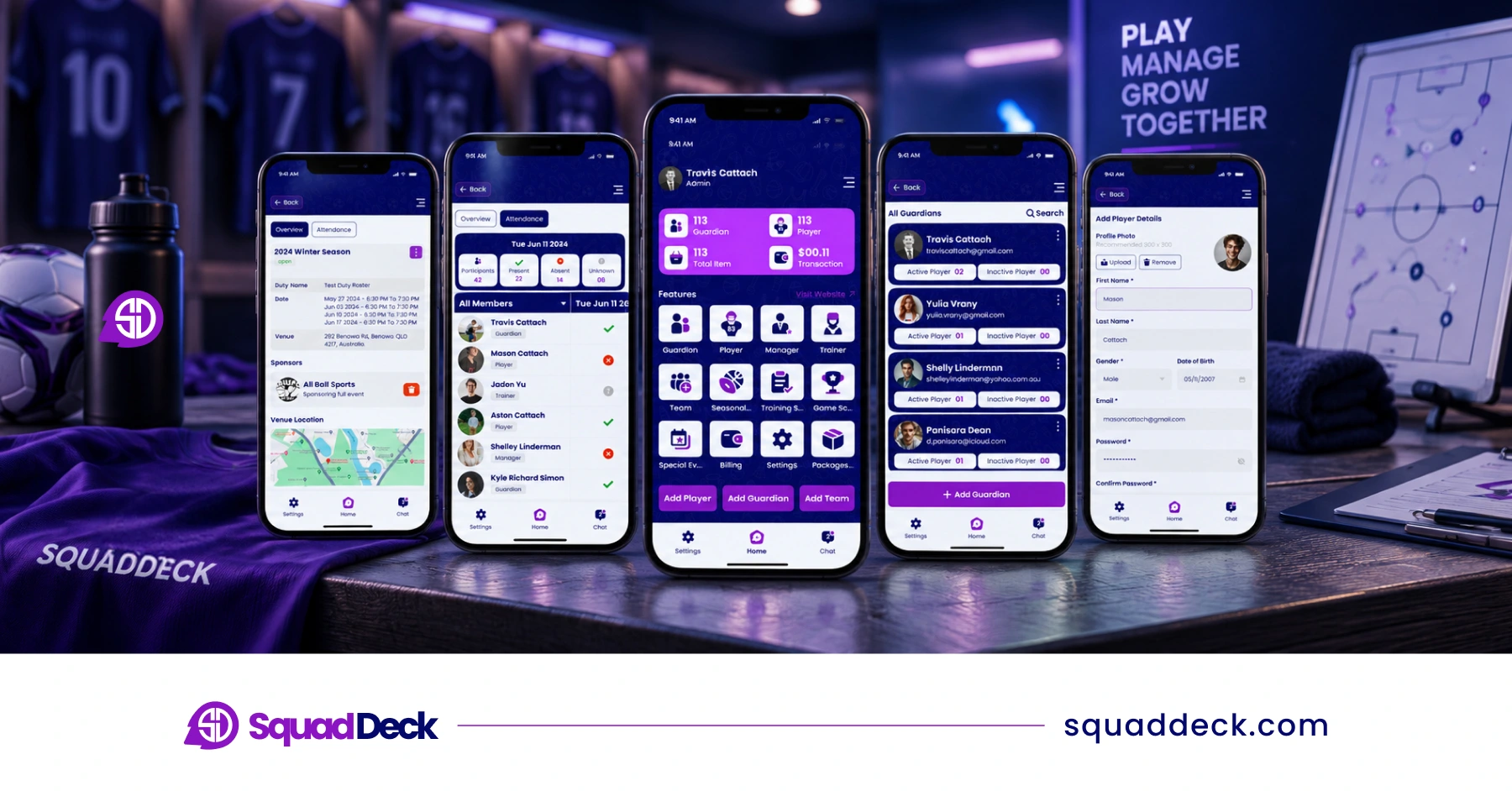
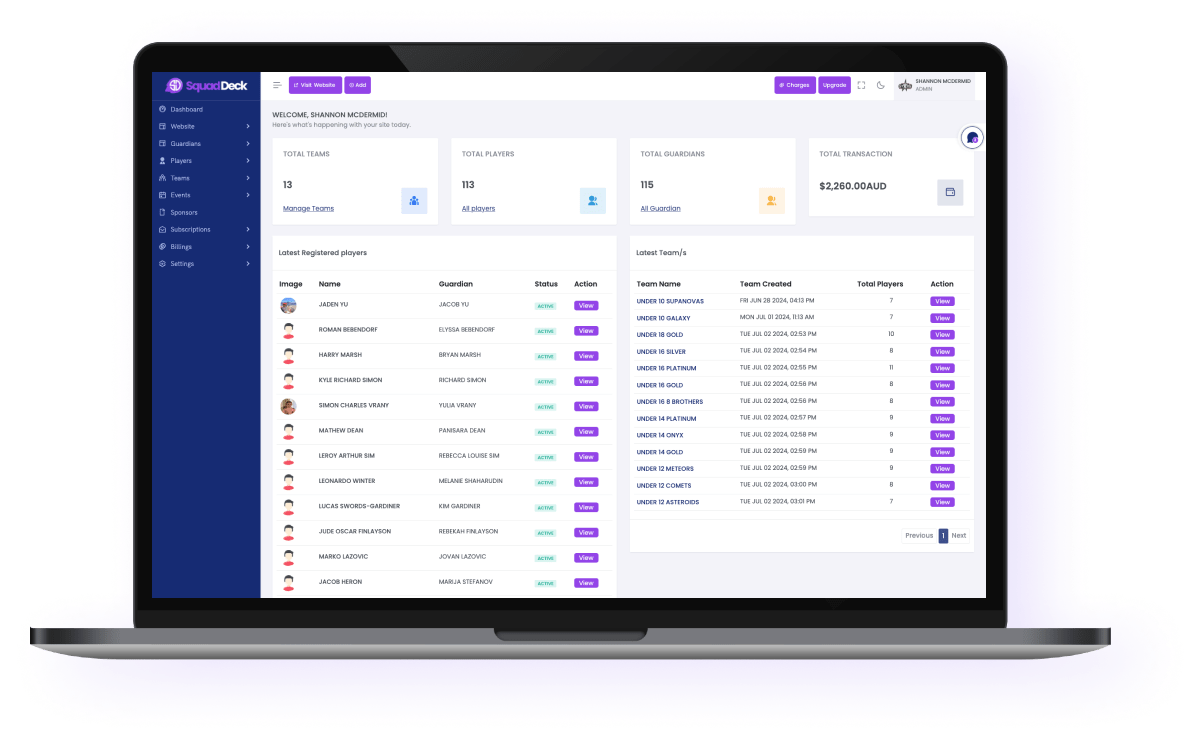
This is exactly where a platform like SquadDeck fits in — turning that everyday flood of club data into simple, actionable tools for coaches, guardians, and administrators.
Key Ways AI Is Transforming Youth Sports Management
1. Smarter Player and Guardian Management
Manually tracking rosters, guardian contact details, medical forms, and team assignments across multiple age groups is one of the most time-consuming parts of running a youth club. AI-assisted registration systems now auto-fill repeated data, flag incomplete forms, and match players to the right team or age bracket automatically — cutting administrative errors and freeing staff to focus on the season itself.
2. Predictive Injury Prevention
Overuse injuries are among the most common — and most preventable — problems in youth sports. AI systems that track training load, practice frequency, and recovery patterns can flag when a young athlete is approaching risky territory, long before a coach would notice it by eye. This kind of proactive safety monitoring, once reserved for professional academies, is now realistic for community clubs too.
3. Automating Scheduling and Communication
Between practices, games, tournaments, and last-minute weather changes, scheduling is a constant headache for club administrators. AI-supported scheduling tools can automatically adjust for field availability, coach conflicts, and travel time, then push real-time updates straight to parents and players — replacing the group text chains and missed emails that used to eat up a coordinator’s entire week.
4. Secure, Simplified Payments and Registration
Membership fees, uniform orders, and tournament payments involve sensitive financial data that clubs can’t afford to handle carelessly. AI-backed payment systems now flag failed transactions, automate reminders for overdue fees, and keep card data off club servers entirely — reducing both administrative follow-up and security risk.
Why Youth Sports Organizations Can’t Ignore AI Anymore
Parents today expect the same real-time visibility from a youth club that they get from any modern app — instant updates, digital payments, and a mobile-friendly experience. Clubs that still rely on spreadsheets and paper forms aren’t just working harder than they need to; they risk losing families to organizations that make participation easier.
At the same time, coaching staff and volunteers are almost always stretched thin. AI doesn’t replace the human side of coaching — the mentorship, encouragement, and team culture that make youth sports meaningful — but it removes the repetitive administrative load that keeps volunteer coaches from focusing on the players in front of them.
How Clubs Can Start Implementing AI in Their Management
Adopting AI doesn’t require an enterprise budget or a technical team. A practical rollout typically looks like this:

- Identify your biggest pain point first — whether that’s registration chaos, missed payments, or scheduling conflicts, start where the time savings will be most visible.
- Choose an all-in-one platform rather than stitching together separate tools for registration, payments, scheduling, and communication.
- Train coaches and staff gradually — a short onboarding session is usually enough for most modern club management software.
- Review results each season and expand usage to the next administrative bottleneck.
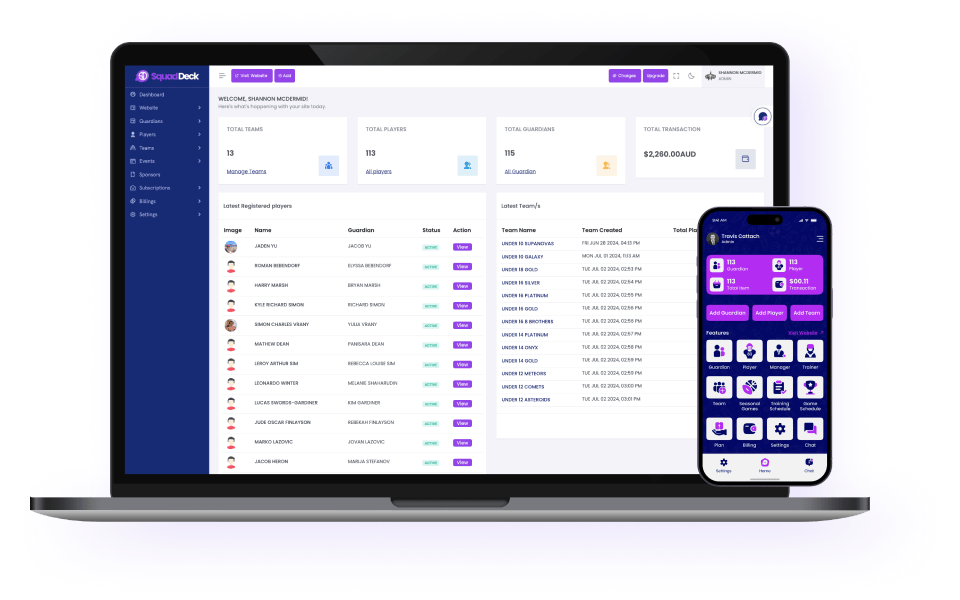
This is precisely the approach SquadDeck was built around: one platform that handles guardian and player management, scheduling, secure payments, real-time chat, and a branded club website, so organizations can adopt AI-supported tools without juggling five different systems.
The Future of AI in Youth Sports Management
Looking ahead, AI in youth sports management will likely become even more predictive — helping directors forecast enrollment trends, anticipate coaching needs, and personalize communication with families based on their engagement patterns. Wearable technology will keep shrinking in size while growing in accuracy, and mobile apps will continue to become the primary way parents and players interact with their club.
The organizations that adapt early will be the ones best positioned to offer a smoother, safer, and more engaging experience — not just for elite academies, but for community clubs of every size.
Frequently Asked Questions
What does AI actually do in youth sports management?
AI helps clubs automate administrative work such as registration, scheduling, and payments, while also supporting player development through performance tracking and early injury-risk detection.
Is AI-powered club management software expensive for small clubs?
Not necessarily. Many modern platforms, including SquadDeck, offer tiered pricing starting from a free plan, so even small clubs and academies can access the same tools as larger organizations.
Does AI replace coaches in youth sports?
No. AI supports coaching by providing data and insights, but it doesn’t replace the judgment, mentorship, and relationship-building that make youth sports valuable for young athletes.
How can a club start using AI in its day-to-day management?
The easiest starting point is an all-in-one club management platform that already includes AI-supported features for registration, scheduling, communication, and payments — rather than adopting several separate tools at once.
Final Thoughts
AI is transforming youth sports management from a paperwork-heavy responsibility into a streamlined, data-informed process — one that gives coaches more time to coach and gives parents the visibility they expect. For clubs ready to make that shift, platforms like SquadDeck bring these AI-supported tools together in one place, so organizations of any size can manage players, schedules, and payments with the same efficiency once reserved for professional academies.
Ready to see it in action? Book a free SquadDeck demo and discover how AI-powered club management can simplify your next season.
Latest Sports